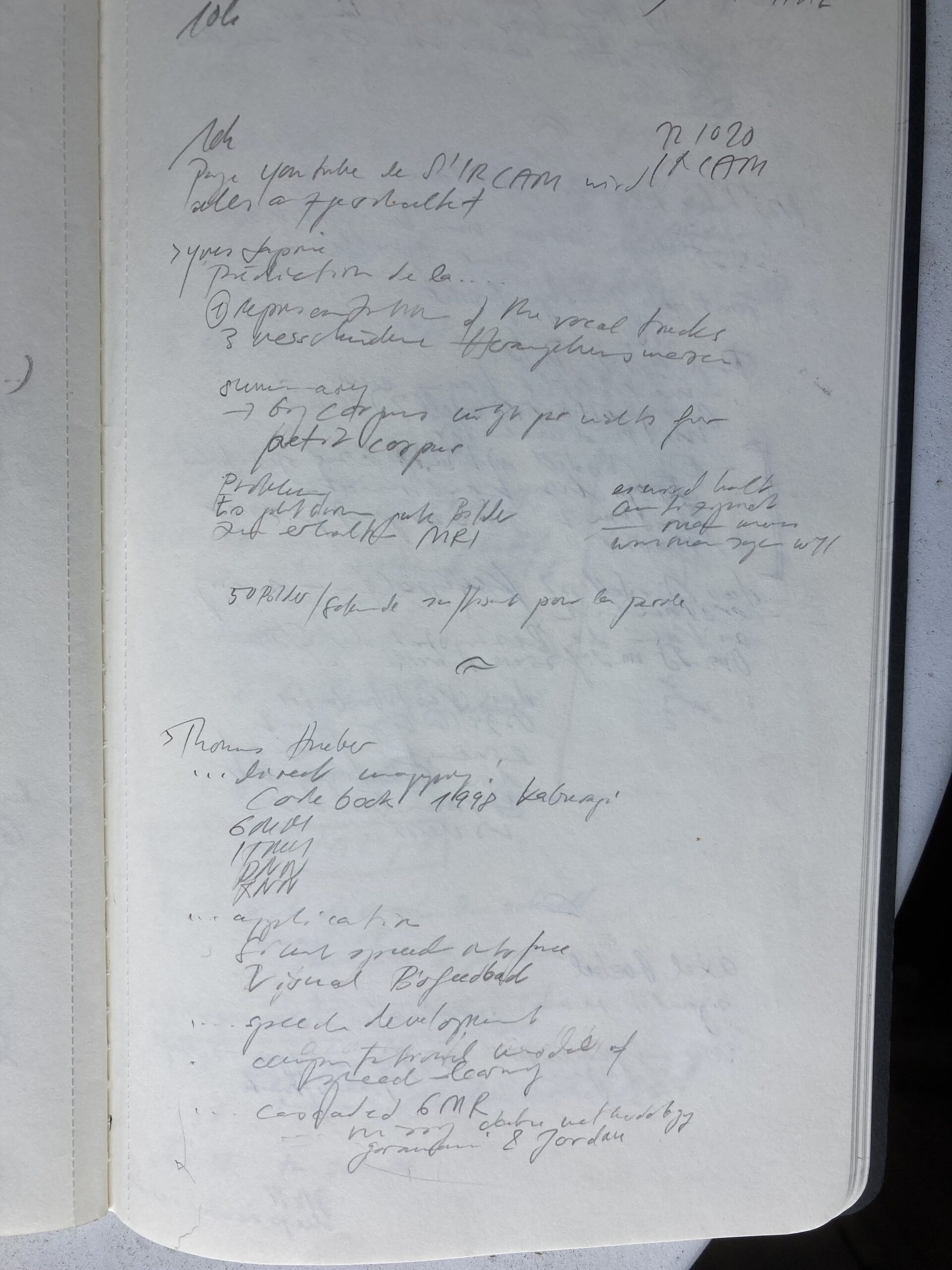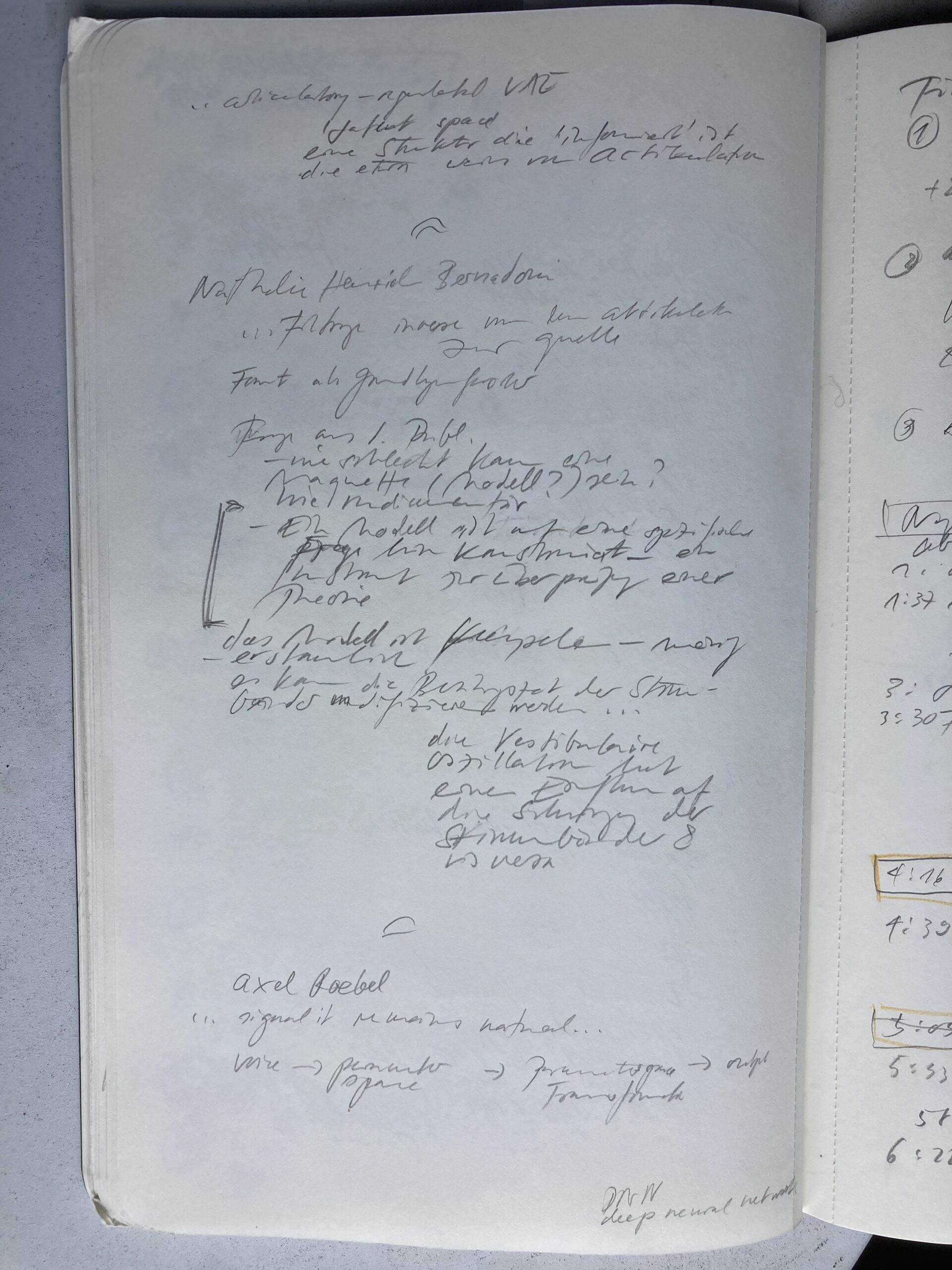
016 Log 230504
Theories of New Musical Technologies
Georgina Born, Kyle Devine
«Music Technology, Gender, and Class: Digitization, Educational and Social Change in Britain», in: Twentieth-Century Music 12/2, 135–172 C© Cambridge University Press, 2015
Kontext: British higher education
In der Perspektive historischer Entwicklungen der practicies of music
Thor Magnusson: On Critical Music Technology, postet March 3, 2016
Blog
«A critical questioning of music technology implies the study of how our music technologies are conditioned by the complex interrelationship of aesthetics, science, culture, and equipment. We should embrace the fact that music technology is the knowledge of the craft of music, and that craft has traditionally, for at least 40 millennia, been about performing music, about people gathering together to play, share, contribute, live the moment, and enjoy the unexpected. The design and use of a bone flute, a lute, a musical score, or a digital audio workstation are all good examples of music technology. Entering the 21st century, we bring all that baggage with us, but let’s unpack it in the context of new musical practices – of new musical technologies.» Aus: On Critical Music Tehcnology, p
Magnusson, Thor: Sonic Writing : Technologies of Material, Symbolic and Signal Inscriptions. London, Bloomsbury Academic, 2019.
– The epistemic nature of music technology
– trad. know-how (procedual knowledge)
– know-what (deklarativ knowledge)
– ideas expressed on paper
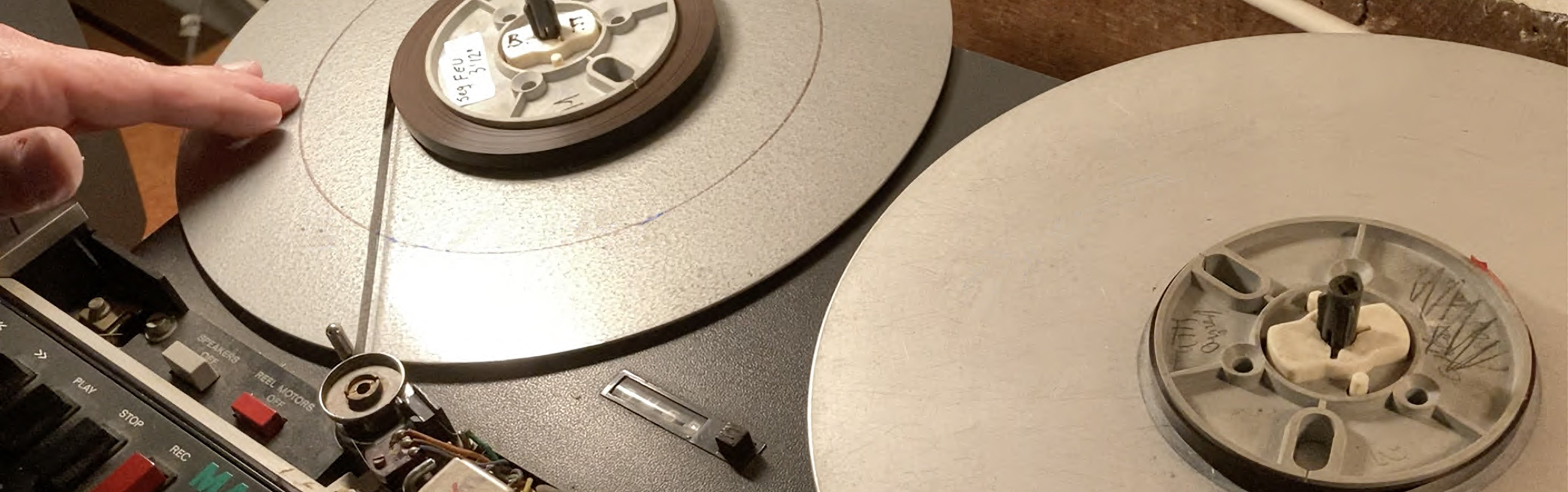
– ideas expressed on a tape
(Magnusson, 2019:135)
Susan Schmidt Horning: Chaising Sound, 2013
– 1920: es stand sehr wenig Zeit für eine Aufnahme zur Verfügung
– Mehr Dokumentation als creative process
– wenig Wissen zur Akustik (S136)
– Produktion verbesserti sich durch die Verwendung von Kondensor-Mikrophonen
– 1922 Moholy-Nagy „Produktion-Reproduktion“ –> über das Potential des Phonographen(1)
– Faszination Maschine
Theodor W. Adorno
– Signalschrift (Datenschreiber) nicht symbolische Schrift
– Signalschrift ist inhuman
zahlreiche musiktechnologische Erfindungen zu Beginn des 20.Jh.
– Mechanische Instrumente
– Synthesizer
– Phonographische Technologien
Feaster, Patrick: “The Forgotten Origins of Phonomanipulation: How Engineers and Inventors Created the Art of Phonographic Sound Manipulation Before Musique Concrète.” In: Sound Studies, Vol. 1, No. 1 (2011), pp. 31–49.
Feaster beleuchtet die oft übersehene frühe Geschichte der künstlerischen Tonmanipulation bereits in der Ära der Schellackplatten und Frühzeit der Phonografie – also lange vor der Ära von Pierre Schaeffer und der musique concrète. Dabei analysiert er Techniken wie:
– mechanisches Sampling (Looping, Reverse, Speed Change)
– experimentelle Schallplattenproduktionen der 1900er–1930er
– frühe künstlerisch-technische Praktiken im Tonstudio
zw 1890-1920 gab es zahlreiche untypische Anwendungen des Phonographen
– Cage, Schaffer, Hung(?), Ferrari sind nicht die ersten
– 1939 Imaginary Lanscape 1
– Schaeffer als der father of Samling
– Nur das DJ vorproduzierte Musik verwenden
– Valdinor Pulsen (1898)
– Magnetic wire recording
Das Magenttonband wurde ca.1940 erfunden
– Um mit einem Magnettonband zu arbeiten braucht es Infrastruktur (Radiostudio)
– Schaeffer
– Inspiriert von Husserls Phänomenology of bracketing
– Merleau-Ponty + Sartre
→ den Ursprung der Sounds ignorieren
→ listen to the pure quality of music
Margusson: IRCAM ist immer noch «note-based» composition (vlg jpg)
Gegensatz zw franz. music concrète und dt. elektronischer Musik
20 Jahrhundert versch. musikalische Praktiken
– Musikalische Automaten
– Player-piano
– Music Box
→ mit der Aufnahme = actual sonic writing becomes a piece
– das Studiodrecording wird zum Werk
– zum mnemotechnischen Objekt
– zur Referenz der Hörg.
→ normative higher degree
Bernhard Stigler (2014)
Theoretiker der Schrift & der Mnemotechniken
Jazz-performance as Composition
«composing in realtime […] becomes the horizont of the music»
→ neuer ontologischer Status der aufgenommenen Werke
Gracyk: Rhythm and Noise: An Aesthetics of Rock, Durham: Duke University, 1996
– thin score: first abstract mathematische Verschriftlichung
– thick score: viel Information zu Instrumenten, Raum, menschl. Ausdruck
Warum arbeiten nicht alle im Studio und Schnipseln bis es gefällt?
neuer Kontext (Gracyk, 1996:146)