003 Logbuch 221106
IRCAM méthode de traitement du signal autour de la voix       

Rencontre Journée de la voix IRCAM, Salle Stravinsky 20.10.22

IMG_1175
IMG_1176
previous arrowprevious arrow
next arrownext arrow

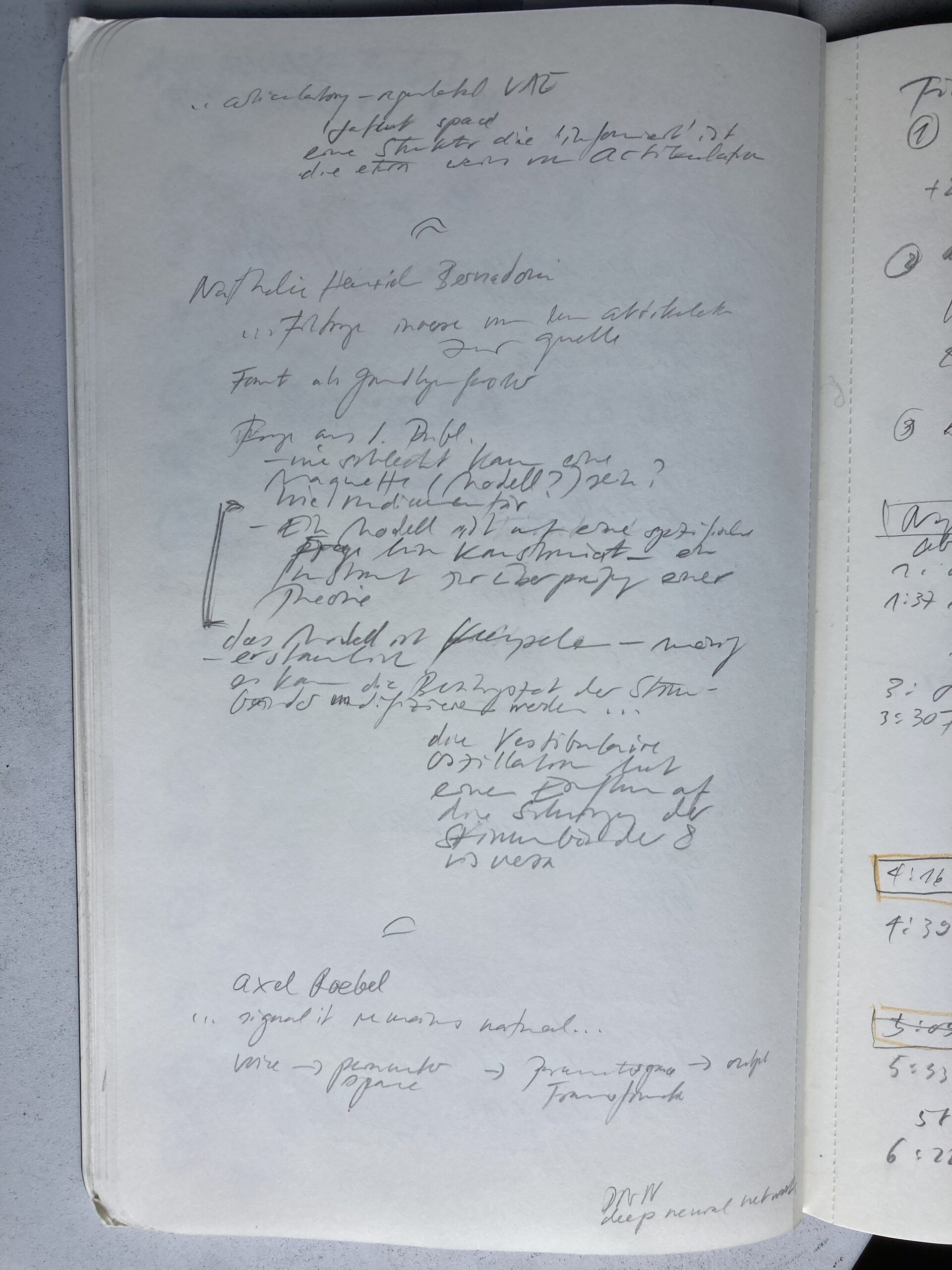
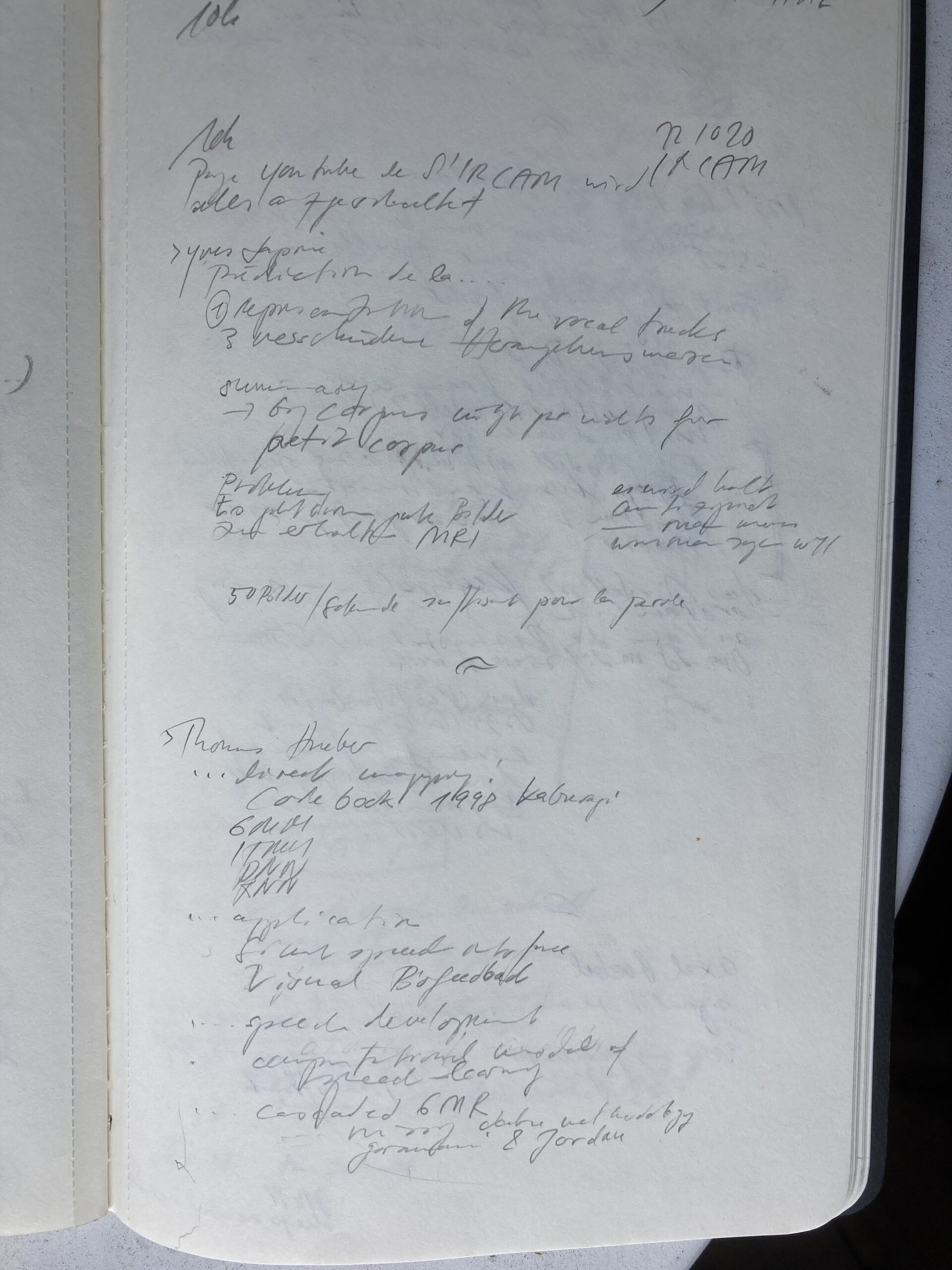
Seit dem Petersburger Preisausschreiben von 1781 dieselbe Herausforderung: die Stimme nachzubauen. Heute nicht mehr länger mechanisch (Kempelen), sondern digital, zB. mit einem Datensatz eines MRI. Problem: die ProbandInnen müssen im MRI zwar reden, sollten den Kopf aber nicht bewegen, unscharfe Bilder! Der Kopf muss festgeschraubt werden (Moulage?). Aus dem so gewonnen Datensatz wird eine Stimme nachgebaut. Beim Sprechakt werden die Silben antizipiert, die nachfolgende Silbe beeinflusst die vorausgehende, eine zusätzliche Schwierigkeit. Zum Schluss der Tagung lässt Axel Roebel ein KI auf der Grundlage von Sonogrammen eine Stimme generieren. Beide Ansätze werden seit dem Petersburger Preisausschreiben 1781 verfolgt: 1. der gennematische, der auf das Hervorbringen einer akustischen Struktur fokussiert und von der physiologischen Funktionsweise des Sprechinstruments absieht (Roebel). 2. der artikulatorische Ansatz, der „anhand einer maschinellen Rekonstruktion wissenschaftlich exakte Erklärungsmodelle für die menschliche Artikulation sucht.» Vgl Dissertation: Audioscoring & Leere Stimmen. Praxisorientierte Stimmforschung zu lettristischen und ultra-lettristischen Stimmexperimenten, S.207.

Ives Laprie
Directeur de la recherche au CNRS au LORIA à Nancy. Ses recherches portent sur la synthèse et la modélisation articulatoire, l’analyse de la parole et l’apprentissage du langage. Ces dernières années, il a essentiellement travaillé sur l’exploitation de données IRM temps réel.

IMG_0951
IMG_0952
IMG_0953
IMG_0954
IMG_0955
IMG_0956
IMG_0957
IMG_0958
IMG_0960
IMG_0961
IMG_0962
IMG_0963
IMG_0964
IMG_0965
IMG_0966
IMG_0967
IMG_0968
IMG_0969
IMG_0970
IMG_0971
IMG_0972
IMG_0973
IMG_0974
IMG_0975
IMG_0976
IMG_0977
IMG_0978
IMG_0979
IMG_0980
IMG_0984
IMG_0985
IMG_0989
IMG_0990
IMG_0991
IMG_0992
IMG_0993
IMG_0987
IMG_0988
previous arrow
next arrow

Stimmen mit einem Bilder-Datensatz eines MRI nachbauen. Problem: die ProbandInnen müssen einerseits reden, sollten sich aber nicht bewegen, der Kopf muss festgeschraubt werden (Moulage?). Aus dem Datensatz errechnet ein KI eine Stimme. Problem: beim Sprechakt werden die Silben antizipiert, das heisst die nachfolgende Silbe beeinflusst die vorausgehende…

Thomas Heuber
Directeur de recherche au CNRS au GIPSA-Lab de Grenoble
Responsable de l’équipe de recherche CRISSP (Cognitive Robotics, Interactiver Systems, Speech Processig

Nathalie H Bernardoni
Directrice de recherche CNRS
De la théorie source-filtre aux interactions pneumo-phono-résonantiels: la compléxité de la voix humai

Axel Roebel
Directeur de recherche à l’Ircam et responsable de l’équipe Analyse et synthèse des sons.

IMG_1137
IMG_1138
IMG_1139
IMG_1140
IMG_1141
IMG_1142
IMG_1143
IMG_1144
IMG_1145
IMG_1146
IMG_1147
IMG_1148
IMG_1149
IMG_1150
IMG_1151
IMG_1152
IMG_1153
IMG_1154
IMG_1155
IMG_1156
IMG_1157
IMG_1158
IMG_1159
IMG_1160
IMG_1161
IMG_1162
IMG_1163
IMG_1164
IMG_1165
IMG_1166
IMG_1167
IMG_1168
IMG_1169
IMG_1170
IMG_1171
IMG_1172
IMG_1173
previous arrow
next arrow

Deep Learning: Analyse der Sonogramme durch KI
Stimm-Synthese aus den ständig wachsenden Datensätzen.

weiterführendes Material im Archiv
Notizheft 221020


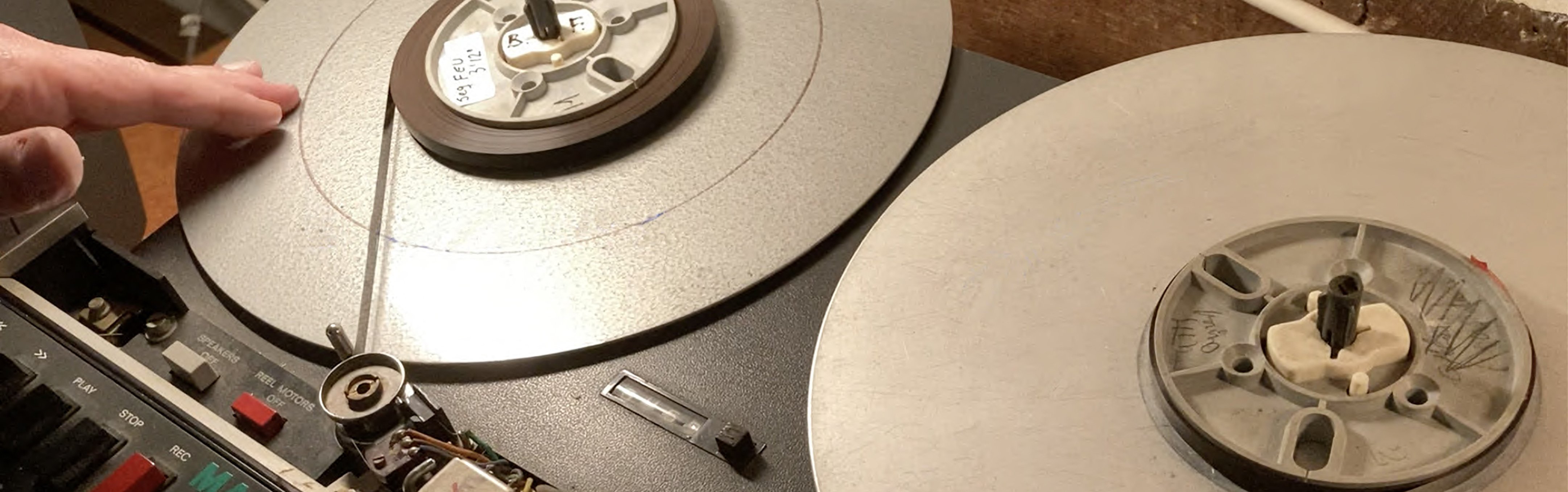
03 Log 221106 Recording Studios der 1950er Jahre

Zürich–Paris 221102
Sound On Sound magazine

Inspired by Norman Petty and Sam Phillips, studio owner Dean Amos has lovingly built a perfect recreation of a 1950s recording studio — right down to the dimensions of the pegboard! We eavesdrop on a session at Sugar Ray’s Vintage Recording Studio to find out why it’s still valid to record an entire band to tape, with one microphone. Sound Engineer Lincoln Grounds and the band reveal the challenges they faced when recording this way. In this experiment rockabilly band Race With The Devil record in a variety of vintage styles. Starting with only a single microphone in the live room, more microphones are added throughout the session. Compared to modern multitrack recordings, we see the differences and challenges faced in recording music the way they did back in the 1950s. See the interviews and session in the video above and download the recordings on youtube.

Recording in the ’50s Style
00:00 – Intro…the honesty of it….
01:32 – Initial Thoughts On The Studio Space….the immediacy of it…especially on a vocals… it appeals to people…that’s the magic of it, instant gratification
02:25 – Single Microphone Set-up
03:45 – Dean Amos: Sugar Ray’s Studio
05:36 – Single Microphone Recording….working with the dead spots of a mik
09:12 – Recording With 2 Microphones
10:48 – Vintage Studio Hardware
17:17 – Using 3 Microphones
18:14 – Vintage Microphones ….echosystems: Phillips used two tape recorders
21:38 – Recording With 4 Microphones
24:29 – Importance Of Performance Ability
28:33 – Artist’s Thoughts On The Studio Environment
29:39 – Lincoln Grounds’ Final Thoughts
34:24 – Future Of Vintage-Style Recording

Shure Microphones:
RCA 44 Mikrophon
FatBoy 55 / 355
RCA 74 Mikrophon


03 Logbuch 221106 Acousma Festival

221029
Mi: Bibliothek IRCAM 14-18h30
Do: Bibliothek IRCAM 14-18h30
Fr: Maison de la Radio, Kontakte und Recherche zur Geschichte der Akusmatik
Sa: Acousma Festival 29.+30. Octobre 2022
maison de la radio, studio 104

Das Publikum sitzt (ergriffen?) vor dem Acousmonium. Auf das Dimmen der Saallichter folgt einen Moment lang eine (ich: falsche?) Andacht: Stille. Auf der Bühne im Halbdunkel Lautsprecher, Kabelschlangen, eine Akustikwand, da und dort ein leuchtend roter Punkt – on/off – Lautsprecher: doch! mit rundem Gesicht! Im schummrigen Schweinwerferlicht, in den Reihen des Publikums das Mischpult: la spatialisatation. Du sollst nicht vor niemandem ergriffen sein. „Stay still!“ lässt die Komponistin am Ende des ersten Stücks eine Stimme sagen: „sie führen uns in einen riesigen Raum, dann sagen sie: stay still!“

lieu de recherche

003 Lieu de Recherche 221029/30
Acousma Festival
29. / 30. 10. 2022

maison de la radio, studio 104, Paris

IMG_1232
IMG_1233
IMG_1224
previous arrowprevious arrow
next arrownext arrow


.


.


Small Inner Spaces V
Uncanny Silences – Performative Mutness

Symposium
Le son dans l‘art performance
– une épistémologie Intermédia
[Pleine association en mode composé*]
Musée des beaux arts & d`archéologie, Besançon
6. April 2022

Uncanny Silences – Performative Mutness
selon Gina Pane
Action Autoportrait(s), mise en condition / contraction / rejet, 11. janvier 1973


Material

Teil I
Powerpoint Präsentation
Textkarten
Teil II
Spotlicht
Notenständer
Score
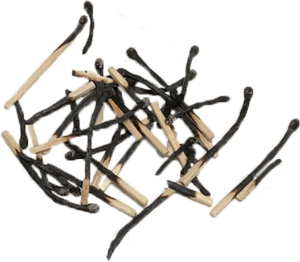
Streichhölzer

Dauer: 30‘

Uncanny Silences – Performative Muteness focuses on a voice that cannot be heard because it is held back, suppressed. A voice that evokes an uncanny silence. A performative muteness, a silence that can be felt, a physical silence, an audible absence that makes all the sounds stand out all the more. At the center of Small Inner Spaces V is the performance „mise en condition“, „the conditioning“ from January 11th, 1973 by Gina Pane, the French born performance artist who lived and worked in Paris and was a member of the 1970s Body Art movement „Art corporel“. The following description of „the conditioning“ commenting on the series of photographs of the performance underlines the silence in which the action took place, highlighting the spreading of the muteness: “In The Conditioning Pane enters a room with a metal bedframe positioned over two rows of burning candles. She lies fully clothed atop the frame and does not move or speak.“ The photographs documenting the performance at the Rodolphe Stadler Gallery in Paris built the basis of Small Inner Spaces V.

Performance Score:

Schürch_2022_Small Inner Spaces_V Partitur Querformat_S1
Schürch_2022_Small Inner Spaces_V Partitur Querformat_S2
Schürch_2022_Small Inner Spaces_V Partitur Querformat_S3
previous arrowprevious arrow
next arrownext arrow


Small Inner Spaces IV
Atemturbine
Funkloch, OnAir
livestream aus dem studio sebastian hofmann, Zürich
20. März 2022

Small Inner Spaces IV Auskultationen, Funkloch, OnAir, 20. März 2022,  Foto©CorneliaCottiati


Funkloch Trio

Sebastian Hofmann, Perkussion
Petra Ronner, Klavier
Lara Stanic, Flöte, Flöte, Radio
Dorothea Schürch, Claves, Konzept
Heidi Hildebrand, Video
Peter Färber, Audioübertragung, Support

Dauer: 40:30

Small Inner Spaces sind eine Sammlung von Lecture-Performances, in deren Zentrum die Rauschfarbigkeit des Stimminstruments steht. Small Inner Spaces IV auskultiert die Stimme, das Mikrophon wird zum Stethoskop. Ausgangsmaterial ist die Aufnahme meiner Ruheatmung. Bevor das Stimminstrument Stimme wird, ist es ein Ateminstrument. In der Atmung ist die Stimme aufgehoben wie die Geige im Geigenkasten. Jeder Atemzug entwickelt eine eigene Rauschfarbigkeit. Der in der Zeit gedehnte Atemprozess wird zu einer Rausch-Flächen-Komposition. Es sind 19 Atemzüge (mit der Idee, die Atemzüge würden immer weitergehen und die Performance würde viele Stunden dauern) – ruhig, konzentriert, wie das Sitzen vor der Brandung – Atem bricht nie ab. Die Aufnahme meiner Ruheatmung dient als Audioscoring, als Partitur in Form eines Audiotracks. Die Sammlung der Atemgeräusche wird zur Vorlage einer graphischen Notation für die Funkloch-Instrumenten. Das Funkloch soll sich in einen Lungenraum, in eine riesige Atemturbine verwandeln. Mit Small Inner Spaces IV kommt eine neue Fassung von Audioscoring zum Einsatz. Während ich sonst ausschliesslich mit Stimmaufnahmen und Stimme arbeite, werden im Funkloch die Atemgeräusche mit Instrumenten umgesetzt.

Small Inner Spaces IV_Score_2
Small Inner Spaces IV_Score_1
previous arrowprevious arrow
next arrownext arrow


Small Inner Spaces III
Auskultationen
Festival EarWeAre, Biel
5. Februar 2022 


Small Inner Spaces III Auskultationen, Festival EarWeAre, 5. Februar 2022, Juragarage, Biel, Foto©CorneliaCottiati

’ll have said it inside me, then in the same breath outside me, perhaps that’s what I feel, an outside and an inside and me in the middle, perhaps that’s what I am, the thing that divides the world in two, on the one side the outside, on the other the inside, that can be as thin as foil, I’m neither one side nor the other, I’m in the middle, I’m the partition, I’ve two surfaces and no thickness, perhaps that’s what I feel, myself vibrating.
Samuel Beckett, The Unnamable, 1953


I
Auskultation Lugenluft / Vocalcords / Mund Lippenschluss

II Lungen- und Lippenluft
III guttural – zirkulär
IV palatal ch – Rachenenge
V husten (willkürlich) – plosiv, guttural
VI Luftsumm = Pfeiffsumm
VII Luft Mik = Wind
IX Megaphon
X Souffle/Knitter

Material:
Mik-Headset
Megaphon,
Loopgerät
Knitterfolie,
Schlauch auf Mikständer
Dauer: 35`

Small Inner Spaces III_IX-4 III_3
Small Inner Spaces III_IX-5 III_4
Small Inner Spaces III_IX-10 III_10
previous arrowprevious arrow
next arrownext arrow