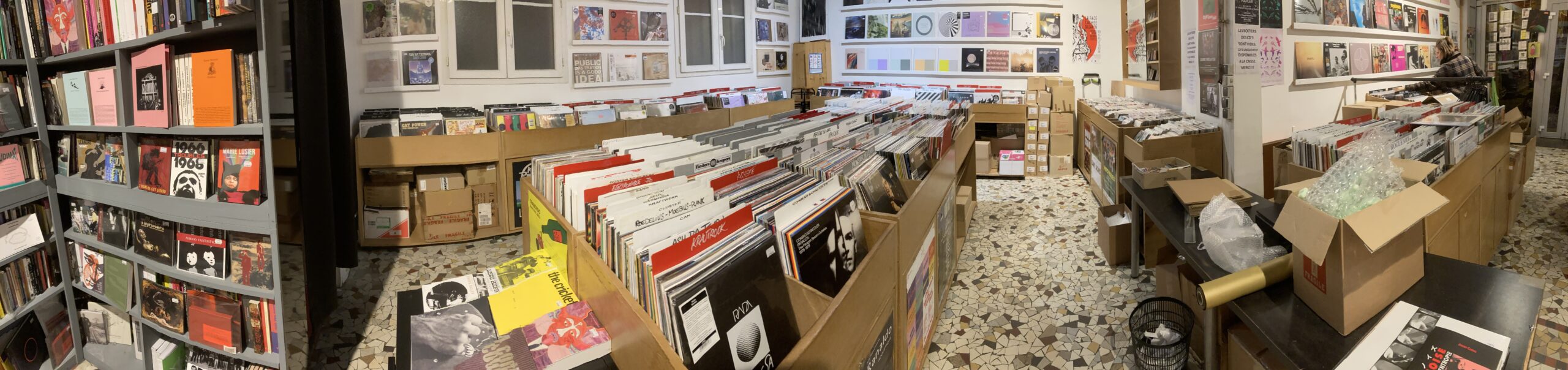
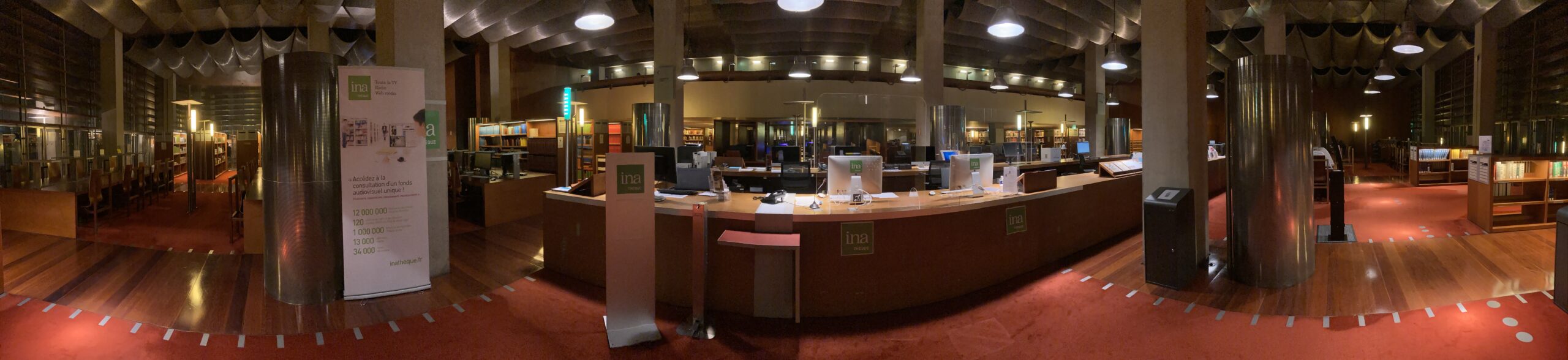
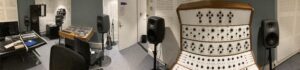
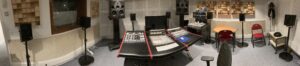
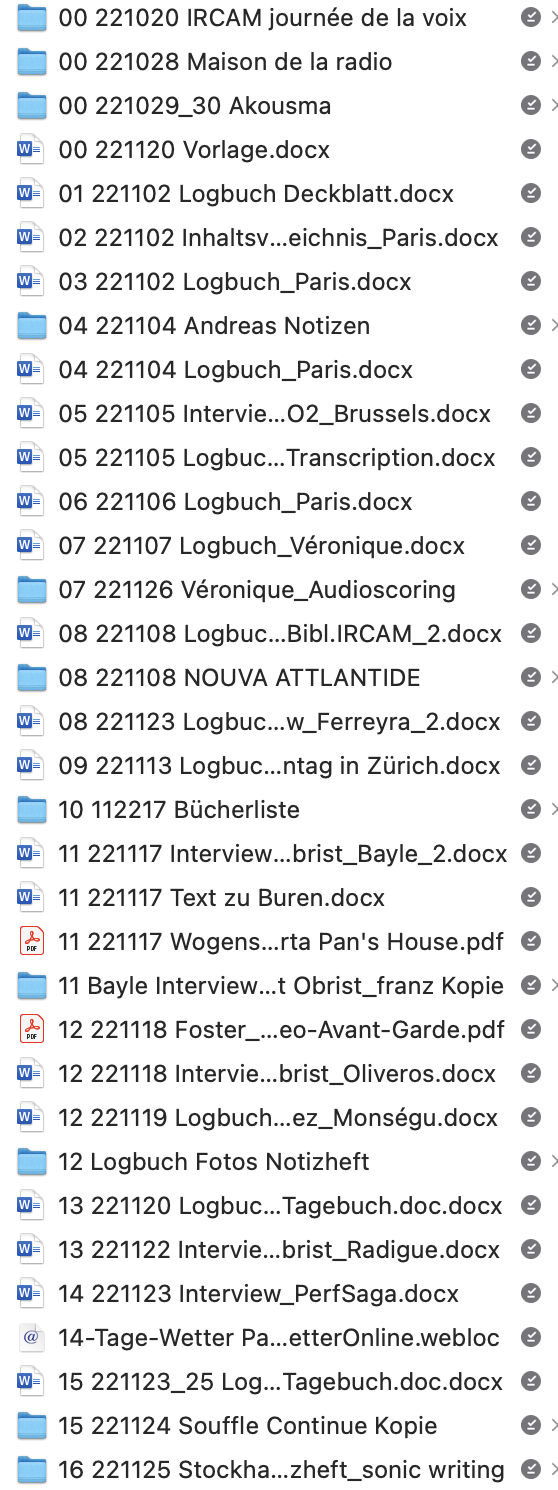
Lieux de Recherche Paris 15.10 – 29.12.2022
Lieux de Recherche Paris 15.5.–3.6.2023


003 Lieu de Recherche 221029/30
Acousma Festival, maison de la radio, studio 104


007 Lieu de Recherche 221107
Studio Véronique Alain, actrice


011 Lieu de Recherche 221117
IRCAM Médiathèque


015 Lieu de Recherche 221123_25
Magazin/Galerie Souffle continue


020 Lieu der Recherche 221128
Galerie Enseigne des Oudin


024 Lieu de Recherche 221203 verlinken
Rue Beaurepaire


026 Lieu de Recherche 221206
Université Paris 8


030 Lieu de Recherche 221214
Archives écrites


032 Lieu de Recherche 221212
Archive_BnF


038 Lieu de Recherche 221220
Studio_audiostudio as an music instrument_GRM


Lieu de Recherche
Mediathèque IRCAM


Lieu de Recherche
Simone Rist


Lieux de Recherche Paris 15.5.–3.6.2023
[under construction]

077 Log 230213 Paris
Übersicht über Dokumente_Fazit

Aufenthalt in Paris November-Dezember
Interviews Dezember 2022

Archiv Recherche

  • Mediathek IRCAM
  • Bibliothek Centre Pompidou
  • Archiv der Galerie Oudin
  • Bibliothèque national de France (BnF)
  • Archive écrites de la Radio France
  • Ina Mediathek

Recherche ultra-lettristischer Aufführungsorte

  • Salle Sociétés des Savantes
  • Rose-Rouge I&II
  • Relais de l’Odeon,
  • Tabou
  • Théâtre de France Odéon
  • Théâtre du Vieux Colombier
  • Chez Moineau


Stadtplan mit Archiv-Dispositiv
Logbuch:

    • 01– 63 (Nov-Dez 2022)
    • 71– 76 (Jan 2023)


Schreiben mit Stimmen

Stimmen bilden keine eigene Kat. der objects sonores
GRM ist das Studio der Studios in Europa. Wer etwas auf sich hielt als Komponist, sei vorbegekommen. In der Nachfolge entstanden Studios in Köln, London, Mailand, so Debade
→ weiterführende Einträge 040-041 Log 221220 (siehe oben)

In den Studios der GRM wird mit objects sonores gearbeitet
Die Stimme ist ein object sonore unter objects sonores.
GRM
-Stimm-Werke?
Stimme ist keine eigene Kat. der musique concrète, “mais non!“ Tonbandaufzeichnungen (Mikrophon) ohne Umwege über eine Partitur – Band läuft! – ein lautpoetischer Ansatz (Chopin, Dufrêne und Wolman). Lautpoeten interessieren sich auch für die Stimme, für ihre Physiologie.
Zu fragen, was in diesem Zusammenhang der Umgang mit der Stimme auszeichne, ein Missverständnis – NICHTS! – die Stimme ist ein object sonore unter objects sonores. Die Frage unangebracht. Entscheidend für die musique concrète ist im Gegenteil, die Quellen nicht mitzuhören/mitzudenken, das Stimmmaterial nicht als solches zu verorten. Das woher und wie, soll von der akustischen Gestalt der objects sonores ablenken. Gestalt hören. Die «Morphologie der Klänge» dem von Schaeffer entwickelten Formenkatalog zuordnen zu können, setzt eine Hörschulung voraus. Schaeffer spricht von Solfège. Das kingt manchmal nach Hör-Umerziehung, dogmatisch. Meine Fragen nach der Stimme provoziert  – es wird mir eine Lektion zuteil, weil ich von Geräusch-hören keine Ahnung hätte.
Die GRM-Kompositions-Verfahren in den Anfängen : cut, pitch, loop und reverse. Ziel, aus den Aufnahmen abstrakte akustische Ereignisse zu formen. Die Einschwingvorgänge (attaque) wegzuschneiden verunkenntlicht die Aufnahmen, interessant, erstaunlich! Für die Komposition der Musiue concrète einen theoretischen Überbau entwickeln, die den Vergleich mit allen anderen Musiktheorien der Zeit (Serialismus) nicht scheuen muss. Soll mit den objets sonores ähnlich verfahren werden können, so müssen sich diese in ein Kontinuum einbinden lassen.

Das Potential der Tonbands differenzierte Informationen zur Quelle mit aufzuzeichnen und nicht bloss abstrakte Tonereignisse –jeder nasse Zungenschlag wird mitgehört, gerade das ein Verweis auf die Authentizität der Aufnahme – dieses Potential ist für die musique concète von keinerlei Bedeutung. Ferreyra spricht zwar von der akustischen Reichhaltigkeit der Aufnahme mit dem Mikrophon im Gegensatz zu elektronisch generierten Klängen, aber lehnt aber ein assoziatives Hören ab im Sinn eines Hören-Verstehen eines Klangs und woher er kommt. Die Quelle wird im Zusammenhang der musique concrète zurückgedrängt – das «Alles-Hören» soll keine Rolle spielen. Die Klangereignisse werden durch die Aufnahmen und durch die Bearbeitung dem Kontext entrissen und entfremdet zu abstrakten Hör-Objekten gemacht. Dokumentarische Aspekte werden wenn möglichst verkenntlicht, als würden diese beim Komponieren stören(?). Ausser-musikalischen Informationen werden in der musique concrète an den Rand gedrängt, was immer auf Körper verweist (Inbegriff des Schreibens mit Stimmen) wird ausgeblendet. Die REIN akustischen Ereignisse werden über ein Lautsprecherorchester wiedergegeben. Qualitäten des abstrakten Hörens nach Schaeffer sind Dichte, Gewicht etc.
Ausgerechnet über ein Kompositionsverfahren, das erlaubt die unterschiedlichste Rezeptionsformen (Kognitionsformen? / Wissensformationen?) zu verbinden (hören, lauschen, abhören, anhören, peilen, fokussieren, orientieren, verorten) wird eine abstrakte, auf Klangfarbentheorien begründete Kompositionstheorie übergestülpt.
Trotzdem werden gewisse Spuren der Aufnahmesituation (der Aufnahmequellen und -verfahren) werden insbesondere von Ferreyra sehr geschätzt. An Missmut grenzend, mit einem Ausdruck des kompletten Unverständnisses kommentiert Ferreyra die musique electronique, sei sei als flach: die Klänge mager, Sounds, die sich in keinster Weise mit den objets sonores verbinden liessen, mit der (körperlichen, vollen?) musique concrète.


Once/Mills
Der Einfluss von Recording als Kompositionsverfahren wird von Ramòn Sender mit Schönbergs 12-Ton-Theorie verglichen, niemand kommt mehr daran vorbei. Während die GRM für die Arbeit mit dem Tonband ein kompositorisches Korsett schafft, das dieser ebenbürdig sein will, suchen Ramon Sender, Morton Subotnick und Pauline Oliveros den Neuanfang. Statt von Avant-Garde ist von Subkultur, sprich von Counter-Culture die Rede, siehe David Bernstein in CCM Archive and History.

070 Log 221128 David Bernstein_History of Mills College
___Interview 231006 David Bernstein
___Interview 231007_16 Ramón Sender and Judy Levy–Sender

unterschiedl. Rollen der Institutionen:
GRM ←→ Radio France
San Francisco Tape Music Center ←→ Mills College.


Fazit I
Musique concrète versus Ultra-Lettrismus versusmusique concrète vocal
Als Kompositionsverfahren zielt die musique conrète auf einen abstrakten Klangraum. Die Körperlichkeit der Recordings ist entscheidend und wird hochgehalten gegenüber den flachen, maschinengenerierten elektronischen Klängen. Hingegen nicht geschätzt wird das Eindringen aussermusikalischer Referenzen. Körperliche, volle Klänge ja, assiziatives Hören nein.
Die Ultra-Lettristen benutzten keine eigenen Studios. Mit ihren Aufzeichnungen generieren sie offene, ambivalente Bezugsfelder zwischen Sprache, Stimmphysiologie und Körper. Die Bearbeitung der Aufnahmen ist transparent, nachvollziehbar. Der Prozess grenzt an dokumentarische Verfahren.
Die musique concrète vocal eines Henri Chopin interessiert sich nicht für die Bezugsysteme des Körpers und überschreibt dessen Spuren durch zahlreiche Overdubs.

Fazit II
Schreiben mit Stimme wird mehr und mehr zu einer Recherche bezüglich des Magnétophons als kompositorisches Werkzeug. Das Tonband ermöglicht Stimme, Sprache, Körpergeräusche aufzuzeichnen, es registriert sämtliche akustische Informationen des Körpers, es drängen sich Fragen bezüglich Ein- oder Ausschlüsse aussermusikalischer Bezugsysteme in der Musik der 50er und 60er Jahre auf.


076 Log 230131 Mills College

Mail to Mills
Application: Unterlagen im Archiv

Subotnick (*1933, lebt Los Angeles)
Oliveros (1932–2016)
Ramon Sender (*1934)


230131
Mills: Archiv der Tonbandmaschinen und Electronic Musical Instr. des SFTMC?

Mills College Facilities
die Webseiten zum Electronic Musik Studio M und D sind eingestellt
Historic Mills College & Center for Contemporary Music Closing
Mills wurde von der Northeastern University übernommen
Vgl. Interviews mit David Bernstein und James Fey
Vgl. Lieu de Recherche

Electronic Music, Studio M
The Electronic Music Studio houses early voltage-controlled analog synthesizers, including a Moog IIIP and the very first Buchla 100 ever created. It also features Focal monitor speakers.

Moog Synthesizer
Buchla Electronic Musical Instrument

Dubbing & Editing, Studio D
The Dubbing and Editing Studio is used for introductory multi-track and editing projects, where students can transfer recordings between various standard two-track formats. The studio includes an iMac with Pro Tools and Waves plug-ins, Focal monitor speakers, a turntable, a CD recorder, cassette recorder, a DAT machine, 1/4″ two-track recorders, a 1/2″ four-track recorder, an Otari 1″ eight-track recorder, and an ADAT eight-track digital recorder. A large array of high-quality microphones are available for those working in this studio.

1/4″ two-track recorders
1/2″ four-track recorder
Otari 1″ eight-track recorder


075 Log 230124 Simone Rist

Prägend für Leben und Werk der in Frankreich geborenen Sängerin und Schauspielerin, Regisseurin und Autorin Simone Rist ist die Begegnung mit Pierre Schaeffer im Rahmen der GRM (Groupe de Recherches Musicales). Ihre Zusammenarbeiten mit den Komponisten Josef A. Riedl, Berio, Luigi Nono, Pierre Boulez und allen voran John Cage und Merce Cunningham begründeten ihre Karriere als Konzertsängerin Neuer Musik.

Worldcat
Neue Musik Zeitung:
Rückblende: Vor 50 Jahren – 1971/01: Cage gibt das Komponieren auf
Mehr Sprachen, mehr Theater: Simone Rist

ZHDK-MIZ
Riedl
Galeriegeschoss: YT_16919
Untergeschoss: YS_1102
Ferreyra
Galeriegeschoss; YT_17034
PURA online
FERREYRA, B.: Rios del sueno / Medisances / L’Orvietan / Vivencias / Cantos de antes (La riviere des oiseaux) (Ferreyra)


Merci beaucoup pour vos bons vœux pour la nouvelle année, une bonne et heureuse année à vous aussi.
Suite à votre remarque, je me suis adressé à Radio Frankfurt pour demander des enregistrements de vous. J’espère avoir des nouvelles bientôt. Vous serez peut-être intéressée de savoir que de nombreux enregistrements de vous sont répertoriés sous ce lien :
Worldcat

[…]

Auf Empfehlung von Simone Rist geht eine Anfrage Radio Frankfurt
Radio Frankfurt Kontakt
keine Antwort

Weiterführende Links
029 Log 221208_230306 Entretien avec Simone Rist
108 Log 230824 Entretien avec Beatriz Ferreyra


74 Log 230123
History of Listening
Ana-Maria Ochoa Gautier

Gautier, Ana-Maria Ochoa: Aurality. Listening and Knowledge in Ninetenth-Century Colombia, Duke University Press, Durham and London, 2014
auf Empfehlung von CdG

– intellectual history of listening
– different “new” technologies that existed prior to the invention of the phonograph (Gitelman 1999, 2006), the trace left by different genres of inscription on the work of music making (Szendy 2008; Johnson 1995)

  • critical work on the philosophical grammar of vocality and writing (Derrida [1974] 1997; Cavarero 2005; Cournut 1974)
  • the study of discourses and practices of the aural in fields such as physiology and acoustics that surrounded the invention of sound machines (Sterne 2003; Brady 1999; Steege 2012), and how specific historical periods prior to the emergence of mechanical sound reproduction sounded (Smith 2004; Rath 2003; Corbin 1998)
  • This recent “auditory turn” in critical theory is giving rise today to the increased formalization of sound studies (Sterne 2012a).
  • For Peter Szendy, the “critical force of listening” has often been “restrained and denied” (2008, 34).

(Ochoa 2014:21f.)

– This book builds on such work but inverts the emphasis on the relation between the written text and the mouth (implied by the idea of the oral) by exploring how the uses of the ear in relation to the voice imbued the technology of writing with the traces and excesses of the acoustic.

Szendy, Peter. 2007. Sur écoute: Esthétique de l’espionnage. Paris: Minuit.
Szendy, Peter. 2008. Listen: A History of Our Ears. New York: Fordham University Press.
Szendy, Peter. 2009. “The Auditory Re- turn (the Point of Listening).” Paper presented at the conference Thinking Hearing, The Auditory Turn in the Humanities, Butler School of Music, University of Texas, October 2–4.

073 Log 230124 Wolman

Barbara Wolman
Anfrage bezüglich Audioaufnahmen
sie sagt nur 1x nein

keine Antwort

Mail/Unterlagen im Archiv

072 Log 221128 Once Festival

  • Leta E. Miller: Once and Again: the Evolution of a Legendary Festival, 2003
  • Ralf Dietrich: „Once and the Sixties“, in: Sound Commitments Avant-garde Music and the Sixties, Hrsg. v. Robert Adlington, New York, Oxford University Press, 2009, S. 169 – 186.


Leta E. Miller:
ONCE and Again: The Evolution of a Legendary Festival, New World Records, 2003
Dokumentinformation:
The document discusses the origins and history of the ONCE Festival, an annual avant-garde music festival held in Ann Arbor, Michigan in the 1960s. The festival was founded by a group of young composers and brought leading experimental musicians from around the world to Ann Arbor over its years of operation. It featured interdisciplinary performances and became a major center for new music during this period, though it operated independently from the University of Michigan School of Music. (zit.n. SCRIBD)
Leta E. Miller (*1947) ist Musikwissenschaftlerin mit Schwerpunkt Musik des 20. Jh. in den USA. Im Zentrum des Artikels steht das Once Festivals (1961-69) in Ann Arbor, Michigan, die Once Group, ihre  Kompositionen, Finanzen des Festivals und Locations des Festivals.

Once Group members:
Robert Ashley
George Cacioppo
Gordon Mumma
Roger Reynolds
Donald Scavarda
Anne Opie Counselman
(*1929), a model, actress, and writer. Anne was secretary of DAC [Dramatic Arts Center] in 1960–61 and would become one of the major forces assuring ONCE’s success: She arranged venues, housing for guests, and numerous logistical details (Millers 2003: keine Seitenangaben)
Mary Ashley: Perf.Interventionen
These productions, literally “built” at brainstorming sessions at the Ashleys’ house, became increasingly daring through the years; the initial ideas often came from Mary Ashley. (Millers 2003: keine Seitenangaben)

Roberto Gerhard:
“Is New Music Growing Old?,” Ann Arbor: University of Michigan publications 62, no. 18, Aug. 10, 1960.
On May 17, 1960, Gerhard delivered a public lecture, “Is New Music Growing Old?”, the title adapted from the last chapter in Theodor Adorno’s Dissonanzen (1956). He countered Adorno’s view that twentieth-century composition had declined from a pinnacle thirty years earlier, asserting, in contrast, that music’s “contemporary confusion” was healthy, “rather what one would expect from a social body deep in ferment and teeming with creative energy. It would seem a poor show if an epoch does not manage to develop its ‘contemporary’ ideas fully in all directions, to the utmost limits of contradiction.” In fact, Gerhard concluded, “we are witnessing nowadays a vigorous effect of stimulation of the older generation by the younger generation. (Millers 2003: keine Seitenangaben)


Robert Adlington: Sound Commitments Avant-garde Music and the Sixties, New York, Oxford University Press, 2009.

List of contributors
Introduction: Avant-garde Music and the Sixties
1. Avant-garde-Some Introductory Notes on the Politics of a Label
2. «Demolish Serious Culture!»: Henry Flynt and Workers World Party
3. Forms of Opposition at the ‚Politiek-Demonstratief Experimenteel‘ Concert
4. Aesthetic Theories and Revolutionary Practice: Nikolaus A. Huber and Clytus Gottwald in Dissent
5. «Music is a Universal Human Right»: Musica Elettronica Viva
6. The Problem of the Political in Steve Reich’s Come Out
8. ONCE and the Sixties: Ralf Dietrich
9. «Scream Against the Sky»: Japanese Avant-garde Music in the Sixties
10. After the October Revolution: The Jazz Avant-garde in New York, 1964-65
11. American Cultural Diplomacy and the Mediation of Avant-garde Music
12. From Scriabin to Pink Floyd: the ANS Synthesizer and the Politics of Soviet..


Ralf Dietrich: „Once and the Sixties“, in: Sound Commitments Avant-garde Music and the Sixties, Hrsg. v. Robert Adlington, New York, Oxford University Press, 2009, S. 169 – 186.

Wann: nach Great Depression, nach 2. Weltkrieg, McCarthy era
Wer: Milton Cohen (visual artist), Harold Borkin, Joseph Wehrer (Achritekten), Gordon Mumma und Robert Ashley (Composer), George Manupelli (film), Mary Ashley (1931–1996) video and performance artist, Cynthia Liddell (1944–2011) singer, member of the sonic art union, Anna Opie Wehrer (Dietrich 2009:170)
Wo: Dramatic Arts Center in Ann Arbor (DAC), Michigan, Americas Midwest (Dietrich 2009:170f.)
ID: nicht Avantgarde (historischer Ballast) sondern experimentell und elektro, in der Wissenschaft verwendete Begriffe
Triebfeder ist technologische Innovation =  Militärtechnologie
(Dietrich 2009:172)

Die ONCE Group gehören zu den ersten outside NY und Los Angeles and SF, die mit Elektronik und Video experimentieren
Ökonomische Nachteil wird zum technischen Vorteil: sie konnten sich keine teuren Apparate leisten → shared electronics, kein institutional studio, ihre Kompositionen klingen allemal besser als alle anderen, so Dietrich. (Dietrich 2009:172).

Electronics and Aesthetics ­– Robert Ashley

  • the Public Opinion Descends upon the Demonstrators (Dietrich 2009:172f)
  • fokussiert auf die Rolle des Publ. (bei Cage ist das professional music establishment davongelaufen) – jeder Reaktion des Publ entspricht ein sonic response
  • something for Clarinet, Piano and Tape (Dietrich 2009:173)

beide Stücke leben von einem Kniff eine unmittelbare Reaktion (des Publ) zu provozieren, aber den Rahmen des Konzerts/Musik nicht zu tangieren

→ Ashleys Definition von Musik: es braucht einzig Publikum, „the occasion was marked by certain sounds“, andere erinnerten sich nicht daran etwas gehört zu haben, aber alle waren damit einverstanden „that a performance of music had taken place“

Interview MOrton Feldman (März 1963):

  • der grösste Fehler/Mangel der graphic scores (NY-School):
    statt für die Befreiung der Sounds stehen sie für die liberation of the Performer
  • Ashley: begrüsst die Verschiebung von der Komposition zu theatralen Performances by flamboyant personalities, including composers themselves (La Monte Young)
  • = the liberation of the composer as a performer
  • Once ist das Festival of personalities
  • once ist mehr Fluxus / Konzeptionelle Musik als die NY-School,
  • verhält sich wie POP-Art Bewegung zu Abstract Expressionism
  • Once pieces sind den konzeptuellen Stücken des Fluxus verwandter als denen der NY School und doch eigenständig.

Electronics and Politics – Gordon Mumma
(Dietrich 2009:174ff)

  • Soundblock 8: Epoxy

Cutup‘s von wiedererkennbaren Schnipseln: rasistische Radioprdiger, bis zu Reden bekannter Politikern, moderne Musik und reaktionäre Politik. Mumma, vgl. mit den Onces exponierte sich politisch am deutlichsten

  • Megaton ist sein wichtigster Beitrag zu Once Repertoire 175
  • early drone music
    (Dietrich 2009:184 Fussnote 24)

Zu Cut-up Verfahren als typische Magnettonband -„Methode“ – Burroghs Idee der cut-up technik, wie sie im Film verwendet wird, vergl Painter Brion Gysin in 1959, vergl Cage, Earl Brown, Robert Rauschenberg

Mummas als research associate in teh laboratory of theUniversity’s Institute of Science and Technlolgy (military sponsored): Militär bezahlt für die Forschung an Klängenm, die Erdbeben auszulösenkönnen  megatons: the bomb was dropped during the perforemance, it was into the minds oft he audience
(Dietrich 2009:176) (Dietrich 2009:183 Fussnoten, 26, 27, 33)

Gaps and Changes
(Dietrich 2009:177)

1965 Once ist anerkannt, etabliert, als von 4 Kompositions-Stud. die „Grat Society“ (Greate?) ins Leben gerufen wird und die Once öffentlicht heruntermachen. Animositäten unter den Generationen die Great(?) Society sind 10 Jahre jünger: bathroom humor, drastisch, ambivalente Beziehung zu Once, Vatermörder

Once

  • long durational
  • prolongued attention
  • das teilen Once und NY-School
  • sustained tendium = slow motion events
  • Konzentration

Grat Society

  • Statt slow(motion): Action!
  • Onces in Theatralität übertreffen
  • cheap sensationalists

Es gab politischen Druck innerhalb der University, Once den support zu kappen. Die Unterstützung von Seiten National Endowment ua. kam zu spät.

Kalter Krieg: Die Biennalen (Venedig und Sao Paolo) werden zum Schlachtfeld des Kalten Kriegs, wo werden die Bilder von Rauschenberg von einer Militärmaschine nach Venedig geflogen, aber für die Musik (Once auf Einladung von Nono) gab’s kein Geld.

The ONCE Group

Wie weiter? Neue Strategien sind gefragt: Once als Touring Theater
(Dietrich 2009:179ff)

  • nicht professionelle Musiker einbeziehen
  • collective rehearsal and collective realisation prozess statt scores

once der amerikanische und vokale Gegnstück zu Kagels instrumentalem Theater

  • beide verwenden Gesten der Musik-Konzert-Konvention
  • beide sind nicht länger PURE-Musik
  • Ashley Formulierung: about-something
  • Kagel => Musik und ihre sozialen Komponente
  • ONCE => extramusikalische Phänomene
  • Once/couples: es geht um gender, roles, heterosexual relationship, sexismus und feminismus
  • Beschreibung von Ashleys: Kittyhawk und Combination Wedding and funural

New Audiences

Die Stücke wurden performativer, es wird gekocht etc. jüngere Akteure. The Place Where the Earth Stands Still 1966-67) sollte 72 Stunden dauern, an artifical closed world, das Publikum wäre eingesperrt worden (wäre/hätte/wurde?)

  • Ashely’s Wolfman und Wolfman Motor-City Revue (1967-68)

Once bleiben provokativ.
1970 kommt die politische Wende und das Ende von Once

Conclusions

Once Festival = 50er Jahre, New Music avant-garde-composer-performer Bewegung, Ann Arbor City, University. Ohne finanziellen Support blieb es eine Performance Gruppe, Auftrittsmöglichkeiten an den Universitäten Land auf Land ab. Das Festival fokussierte auf Kunst, die Once Gruppe auf die Gesellschaft
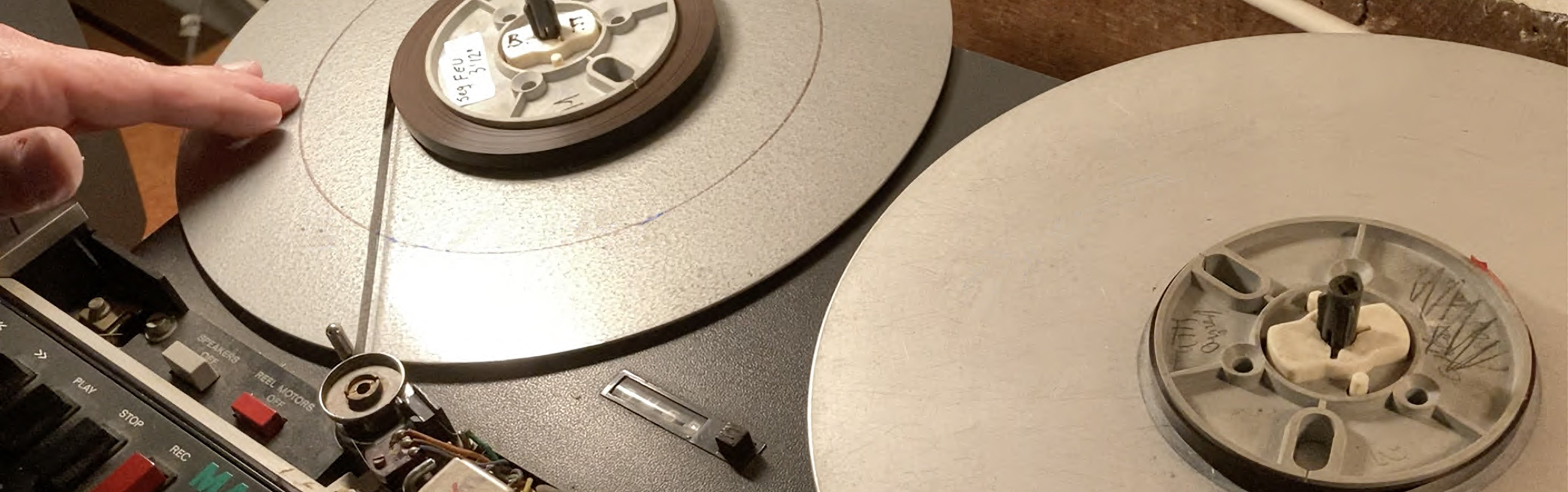
070 Log 221128
David Bernstein
History of Mills College

Archives & History
CCM’s archives include an extensive collection of recordings made at Mills and the San Francisco Tape Music Center. These rare recordings of influential works and interviews from an earlier era of electronic music represent a valuable piece of musical history. We are currently transferring many of these recordings to digital formats to improve their longevity and usability. The archives also contain a large collection of technical journals, periodicals, and books.

«Thirty Years of Non-Stop Flight: A Brief History of the Center for Contemporary Music»
David W. Bernstein
For more than three decades, the Center for Contemporary Music (CCM) has played a leading role in the development of new music. CCM’s prehistory dates back to the early 1960s, a time when composers in the United States increasingly recognized the enormous potential of electronic music. In the 1950s, this new and exciting musical resource had captured […]


230118
Setting CCM
Multimedia, video, electronic music, and improvisation

fixed ←→ unfixed
Kontrolle, Kontrollierbarkeit, oder schlicht der Kontrolle zugänglich ←→ Impro
Prefixed, composed ←→ spontaneous, instant composing
Programming ←→ interaction with program


230119
chez H
6h


042 Log 221220 Nicolas Debade
GRM_Zeitkonzepte
und aussermusikalische Bezüge

Nicolas Debade
Komponist, Musiker, Mitglied der Groupe de Recherches Musicales (GRM) seit 2019, Auszüge aus dem Interview vom 20.12.2022, 10h-12:15, Studios GRM, Paris.
Weiterführendes Material unter 040 Log 221220 und 041 Log 221220

pensée musicale
Zeit-Konzepte

  • la situation granulaire
  • Bergson / Einstein
  • intuition
  • potentiel

puis qu’on parle de la musique:

  • code
  • pensée musicale: versch. Modes d’existence, die sich nicht ineinander übersetzen, sondern nur diplomatisch (Latour) vermitteln lassen
  • point de vue recherche / technique

Zeitverständnis
wie Zeit (re)präsentiert
wie wird Zeit «gemacht»
Umgang mit Zeit → Umgang mit Körper/Leib?

Bleibt das Magétophone in der Zeitachse unbearbeitet → Integrität der Zeitachse → Aufzeichnung = realer Zeit
nicht als Repräsentation realer Zeit
zu Beginn ist es kein symbolischer Prozess
Erst in einem zweiten Schritt wird das Tonbandmaterial zu einem Sound-Partikel
mit dem Cut-up  verändert sich der Status der Schrift von der Aufzeichnung, zum Materialvorrat (vgl. Tonvorrat)
Soundpartikel (Tonbandmaterial) → Index (Icon, Symbol)?
Technische Schriften sind Indices?
Die integrale Aufzeichnung steht für einen «realen» Vorgang, eine mechanische Datenschrift, die Komposition für eine fiktionale, verdichtete, gestaltete Zeit?


pensée musicale
aussermusikalische Bezüge
Vgl. Diss. S.175
Theodor W. Adorno (1903–1969) geht in seinem Essay On popular music731 auf die Problematik phonographischer, sonischer Materialaspekte ein, welche dokumentarische, ereignishafte und biographische, also aussermusikalische Bezüge mit der Interpretation eines Werks vermengen. Auch Pierre Schaeffer erörtert im Rahmen seiner Theorie zur Musique concrète die Fragen nach dem Status der objets sonores, für die er im Gegensatz zu Adorno eine Autonomie als reine Klangobjekte beansprucht.
Ähnliche Fragestellungen werden im Rahmen von „sonic materialism“ des Philosophen Christoph Cox (*1965) diskutiert, hier zu Schaeffers Klangobjekte als autonome Ereignisse:

Pierre Schaeffer […] aimed to show in his analysis of the objet sonore, the sonorous object, which, he maintained, has a peculiar existence distinct from both its source and the listening subject. The sonorous object, Schaeffer insisted, is not the instrument that produces it, not the medium in or on which it exists, and not the mind of the listener. Sounds are ontological particulars and individuals rather than qualities of objects or subjects. And this is why works of musique concrète are not representations – of objects in the world or of worldly sounds – but presentations of sonorous objects. (Cox 2011:156) (1)

Klangobjekte sind individuelle Objekte, die die Klangwelt nicht repräsentieren, sondern die sich präsentieren, so Cox. Zum Konzept der objets sonores gehört auch Schaeffers Theorie der écoute réduite, 734 ein von allen aussermusikalischen Vorstellungen befreites Hören, das ausschliesslich auf die akustische Gestalt der Ereignisse fokussiert. Diese Art des Zuhörens hat sämtlichen assoziativen Ballast abgeschüttelt. Cox formuliert in Anlehnung an Schaeffer:

[…] we can experience a sound without experiencing its source, and the source without the sound. So while sources generate or cause sounds, sounds are not bound to their sources as properties. Sounds, then, are distinct individuals or particulars like objects. […] If sounds are particulars or individuals, then, they are so not as static objects but as temporal events.(Cox 2011:156) (2)

Es geht um das klangfarblich orientierte Hören
Adorno spricht von einer Überbetonung des Sonischen, als von einer Überbetonung der Oberfläche, Die sonische (?) Erscheinung der Musik zweitrangig.
→ in Theodor W. Adorno: „On popular music“, in: Essays on Music, University of California Press, Berkley, Los Angeles, London, 2002

Christopher Cox: Beyond Representation and Signification: Toward a Sonic Materialism, in: journal of visual culture, Volume 10 Issue 2, Special Issue: Sonic Arts and Audio Cultures, SAGE Publications (Los Angeles, London, New Delhi, Singapore and Washington DC),  August 2011
Christopher Cox: Beyond Representation_Zusammenfassung


041 Log 221220 Nicolas Debade
Literatur, Links, Netzwerke

Mail 221220

Nicolas Debade
Komponist, Musiker, Mitglied der Groupe de Recherches Musicales (GRM) seit 2019, Auszüge aus dem Interview vom 20.12.2022, 10h-12:15, Studios GRM, Paris.
Weiterführendes Material unter 040 Log 221220 und 042 Log 221220

Artsonores Médathèque
Pierre Henry at work
La naissance de la musique concrète et électro-acoustique
Music Makers Machines
a brief history of electronic music

Revue Spectres
est une publication annuelle consacrée à l’expérimentation sonore et musicale, coéditée par Shelter Press et l‘Ina GRM – Groupe de Recherches Musicales.
les presses du réel : Spectres

Spectre n004 Mille Voix
2023 wird eine Ausgabe zu Schaeffer herauskommen
La voix comme matière musicale

Spectres n° 01 – Composer l’écoute
présente une série de textes de compositeurs français et étrangers (Félicia Atkinson, François Bayle, Brunhild Ferrari, Stephen O’Malley, Jim O’Rourke, Éliane Radigue, Chris Watson…) qui s’entretiennent sur l’importance de la dimension personnelle dans la pratique de l’expérimentation sonore et musicale.
Cette publication a été pensée comme un prisme et un manuel. Suivant l’arc « traditionnel » de la composition électroacoustique (écouter – enregistrer – composer – déployer – ressentir), chacune des contributions regroupées ici pointe un aspect personnel, fragment de territoire passionnant qu’est celui de l’expérimentation sonore et musicale.
Si le terme de musique expérimentale a pu être assimilé à un genre, voir à un style, il ne faut pour autant pas oublier l’usage initial de ce terme, qui était basé plus sur la démarche que sur la ligne esthétique adoptée. L’expérimental, en effet, est d’abord un esprit, un esprit d’exploration des territoires inouïs, un esprit d’invention qui voit dans la composition musicale plus un voyage vers des terres incertaines qu’une démarche assurée produisant dans le giron de terres balisées et reconnues.


Kontext IRCAM
GRM ←→ IRCAM

  • IRCAM Teil des Centre Pompidou
  • IRCAM steht für Informatik
  • Zusammenarbeit mit den Bell Laboratories auch marktorientiertes Produktedesign
  • different reseau
  • different financement
  • GRM financement par redevance (Gebühren)

Kontext Tape Music

  • Suzanne Ciani
  • 1948 Cage & Schaeffer
  • Tape music in NY
    • 1951 Bebe and Louis Barron: Bebe and Louis Barron
    • Cage Williams Mix→ Paul Williams: The Cage Mix
      Demystifying a largely misunderstood chapter in John Cage’s biographical narrative, this article explores the pivotal role architect and philanthropist Paul Williams played in Cage’s life, and for whom Cage named his famous magnetic tape composition Williams Mix(1952–53). Retracing the activities of both men, beginning with their earliest encounter at the experimental Black Mountain College in North Carolina in 1948, this investigation documents for the first time the extent of their mutually devoted relationship. Newly uncovered source material and photographs also reveal the valuable contributions Williams made as primary benefactor and mastermind of the intentional community called the Gatehill Cooperative (a.k.a. “Stony Point”), a place Cage called home for seventeen years (1954–71). There Cage developed a “hunger for nature,” wrote his widely read and influential book Silence (1961), and undertook some of his most significant musical projects.
    • Paul Wiliam, composer, New York
    • Christian Wolff
    • Sparse: Interview mit Christian Wolff
    • Cage, Earl Brown (GRM), Feldman
    • Cage: imaginary landscapes
  • Karlheinz Stockhausen
    (collants → um die 1000 Schnitte zu kleben…)
    realisiert 1952, publ. erst 1992
    Stockhausen: Konkrete Etüde
    Philippe Manoury : Stockhausen au-delà…

Schaeffer tries to find common ground (for GRM, IRCAM ed.all)
– common interest
– not only for music concrète

La première Décennie Internationale de la Musique Expérimentale du 8 au 18 juin 1953.
organisé par Le Groupe de Recherches de Musique Concrète (GRMC) sous la direction de Pierre Schaeffer

Carlos Palombini: PIERRE SCHAEFFER, 1953: TOWARDS AN EXPERIMENTAL MUSIC
Published 1 November 1993 in :
Art, Music & Letters
Abstract:
In 1953 the Groupe de Recherches de Musique Concrete de la Radiodiffusion-Television Fran;aise, presided over by Schaeffer, organized the First International Decade of Experimental Music, which took place at UNESCO in Paris between 8 and 18 June. ‚Vers une musique experimentale‘, a special issue of the Revue musicale edited by Schaeffer and devoted entirely to the event, was announced. The final proof, revised and approved by the authors and Albert Richard, editor of the periodical, was ready on 10 July 1953. Richard nevertheless decided to postpone its publication. Four years later, this issue was finally printed, with the addition of Richard’s explanations and excuses…

Kontext Recherche sur la voix
Faculté de Médecine de Paris
Clinique Oto-Rhino-Larynogogique
Cours International de Phonologie et de Phoniatrie
LA VOIX
2.-7.3. Paris 1953

Kontext Artist Movements
Fluxus

  • François Bayle war Teil des editorial boards eines Fluxus Magazin in NY
  • François Bayle : sa vie – Les coulisses de la création
  • FLUXUS: MAGAZINES, MANIFESTOS, by Clive Phillpot
    George Maciunas’ choice of the word Fluxus, in October 1960, as the title of a magazine for a projected Lithuanian Cultural Club in New York, was too good to let go when that circumstance evaporated. In little more than a year, by the end of 1961, he had mapped out the first six issues of a magazine, with himself as publisher and editor-in-chief, that was scheduled to appear in February 1962 and thereafter on a quarterly basis, to be titled Fluxus.
  • Moma: fluxus_editions, 2012

Lettrismus

  • Maurice Lemaître hatte Kontakt zu GRM
  • François Dufrêne hat mit Pierre Henry zusammengearbeitet → Granulomètrie, 1967

Ultra-Lettristen/Lettristen

Situationisten

  • tout est art
  • L’art insitu
  • Happing
  • Fluxus
  • Actionism
  • revolution de la vie pour l’art / literature

Nouveau Realistes
GRM fut la révolution de la musique, révolution de la création musicale

cinema experimental